
High-boiling-point solvents play a critical role in many industrial processes—from inks and coatings to oils, greases, adhesives, and specialty chemical formulations. They are also among the most challenging materials to recover efficiently.
Facilities often discover that standard solvent recycling approaches that work well for low- or mid-boiling solvents struggle when boiling points rise, contamination increases, or viscosity changes during processing. Poor recovery rates, excessive energy use, and accelerated equipment wear are common symptoms of systems that are not engineered for these conditions.
This article breaks down why high-boiling solvents behave differently during recovery and outlines the equipment configurations required to recycle them reliably, safely, and cost-effectively.
Why High-Boiling Solvents Are More Difficult to Recycle
High-boiling solvents typically require significantly more energy to vaporize. As boiling points increase, several compounding challenges emerge:
- Higher operating temperatures increase thermal stress on heaters, seals, and internal components
- Viscosity rises as solvents concentrate, slowing heat transfer and evaporation
- Residue buildup accelerates, increasing fouling and cleaning frequency
- Thermal degradation risk grows for heat-sensitive solvents or additives
In many waste streams, these solvents are not isolated. They are mixed with pigments, resins, polymers, and fine solids that further complicate distillation behavior.
Trying to process these materials in basic batch distillers often results in long cycle times, incomplete recovery, or premature shutdowns due to overheating or residue accumulation.
Common Failure Points in Improperly Designed Systems
Inefficient Heat Transfer
Thickening waste streams reduce convection inside the boiler, making it difficult to deliver consistent heat to the solvent phase.
Excessive Energy Consumption
Without pressure control or vacuum assist, systems rely solely on elevated temperatures to drive evaporation, dramatically increasing energy use.
Poor Solvent Quality
Thermal stress can discolor recovered solvent or alter its performance, limiting reuse.
Increased Maintenance and Downtime
Burn-on, scaling, and sludge accumulation lead to frequent manual cleanouts and unplanned downtime.
These problems are not process errors—they are system design mismatches.
Engineering Solutions for High-Boiling Solvent Recovery
Successfully recycling high-boiling solvents requires more than larger heaters. It demands a system engineered around thermodynamics, material behavior, and operational realities.
Vacuum-Assisted Distillation
Lowering the internal pressure of the distillation chamber reduces the effective boiling point of the solvent. This allows evaporation to occur at significantly lower temperatures, delivering several advantages:
- Reduced thermal degradation
- Lower energy consumption
- Improved solvent quality
- Increased system longevity
Jacketed or Enhanced Heat Transfer Designs
High-boiling applications benefit from systems that maximize heat transfer area while maintaining temperature control. Jacketed kettles or engineered heat exchangers provide:
- More uniform heating
- Reduced hot spots
- Better performance as viscosity increases
This approach is essential for waste streams containing resins, inks, or polymers that concentrate during recovery.
Self-Cleaning and Agitation Systems
As solvent boils off, remaining residues become thicker and more prone to adhesion. Systems designed for high-boiling solvents often incorporate:
- Mechanical scrapers
- Agitation or mixing mechanisms
- Automated sludge discharge
These features prevent buildup, maintain heat transfer efficiency, and reduce manual cleaning labor.
NexGen integrates these capabilities into its automated and integrated solvent recyclers, designed for continuous or high-throughput operations.
PLC-Controlled Automation and Monitoring
High-boiling solvent recovery leaves little margin for error. Automated control systems allow precise management of:
- Temperature ramps
- Pressure levels
- Cycle timing
- Discharge intervals
Advanced platforms such as DISTI-Link provide real-time visibility into performance, helping operators maintain consistent recovery while protecting equipment.
Manual vs. Automated Systems: When Each Makes Sense
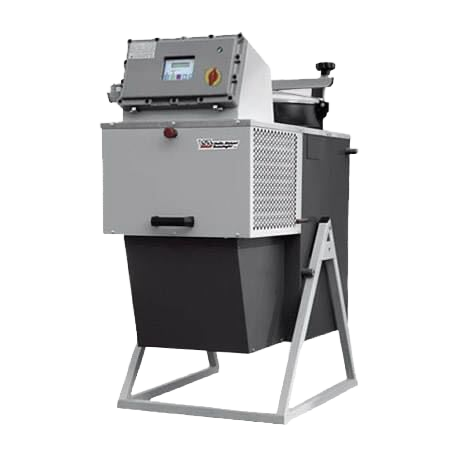
Manual or semi-automated recyclers
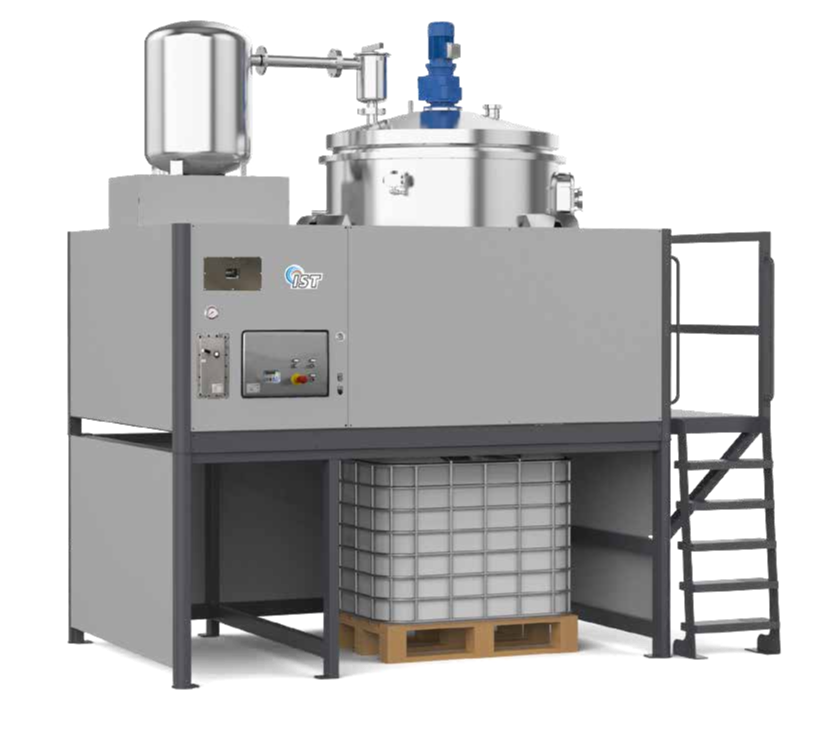
Fully automated systems
For facilities already running solvent-based parts washers, integration with an automated recycler often delivers the fastest return by closing the loop on solvent use.
Designing for Closed-Loop Performance
High-boiling solvent recovery is rarely a standalone challenge. It is usually part of a broader cleaning and waste management process that includes:
- Parts washing
- Rinse cycles
- Sludge handling
- NexGen specializes in closed-loop system design, connecting solvent recyclers with parts washers to minimize waste, manual handling, and compliance risk.
Rather than forcing high-boiling solvents into generic equipment, systems should be engineered around the actual waste stream, throughput, and operating constraints.
When to Re-Evaluate Your Solvent Recovery Strategy
If your operation is experiencing any of the following, it may be time to reassess system design:
- Declining recovery rates as solvent loads increase
- Rising energy costs per batch
- Frequent cleanouts or unplanned downtime
- Recovered solvent that no longer meets process requirements
These are not inevitable costs of high-boiling solvents—they are indicators that the system is not optimized for the application.
Engineering the Right Solution
Recycling high-boiling solvents is absolutely achievable, but only when the system is designed with the right combination of vacuum control, heat transfer, automation, and residue management.
NexGen approaches these applications as engineering problems, not catalog selections—configuring manual, semi-automated, or fully integrated solvent recovery systems based on real operating data and long-term performance goals.
To discuss your solvent characteristics, recovery targets, and integration opportunities, explore our solvent recovery systems or request a quote to start a technical conversation.